Sensor-led, Technology Empowered | KUS In-depth Interpretation of Thermal Management Technology Evolution and Industrial Future
The 14th China Vehicle Thermal Management PLUS Annual Conference was successfully held in Shanghai on July 1–2. As one of China’s most professional and authoritative top-tier summits in the thermal management industry, the conference focused on cutting-edge developments of the new energy vehicle sector, covering the entire industrial chain and technological breakthroughs of automotive thermal management.
Leveraging its in-depth technical accumulation in sensors and thermal management, KUS was invited to attend the event. Li Xiaoxiang, General Manager of the Marketing Department at KUS, participated as a guest keynote speaker and delivered a speech titled Homologous Thermal Management for Vehicles and Computing Equipment, Sensor Priority: Empowering Thermal Management Upgrade for Automobiles and AI Data Centers. He shared the evolutionary roadmap and innovative achievements of cross-scenario thermal management technologies in depth. His forward-looking technical insights and mature industrial solutions garnered high attention from professional audiences.
Deep Industry Cultivation and Professional Empowerment
Li Xiaoxiang, the keynote speaker, currently serves as General Manager of the Marketing Department at Guangdong KUS Sensing Technology Co., Ltd. He also holds multiple industry positions including Director of the China Internal Combustion Engine Industry Association, Member of the Guangdong New Energy Vehicle Industry Association, Member of the Shenzhen Automotive Electronics Association, and Director of the TIAA Alliance. Additionally, he is a compiling member of the Yearbook of Energy-saving and New Energy Vehicles and Deputy Chief Expert of the Yearbook of China Intelligent Connected Vehicle Industry Development. As a recipient of the Dongguan High-level Talent “Guanxiang Card”, he has long been dedicated to the fields of automotive electronics and thermal management, with rich industry insights and extensive industrialization experience.
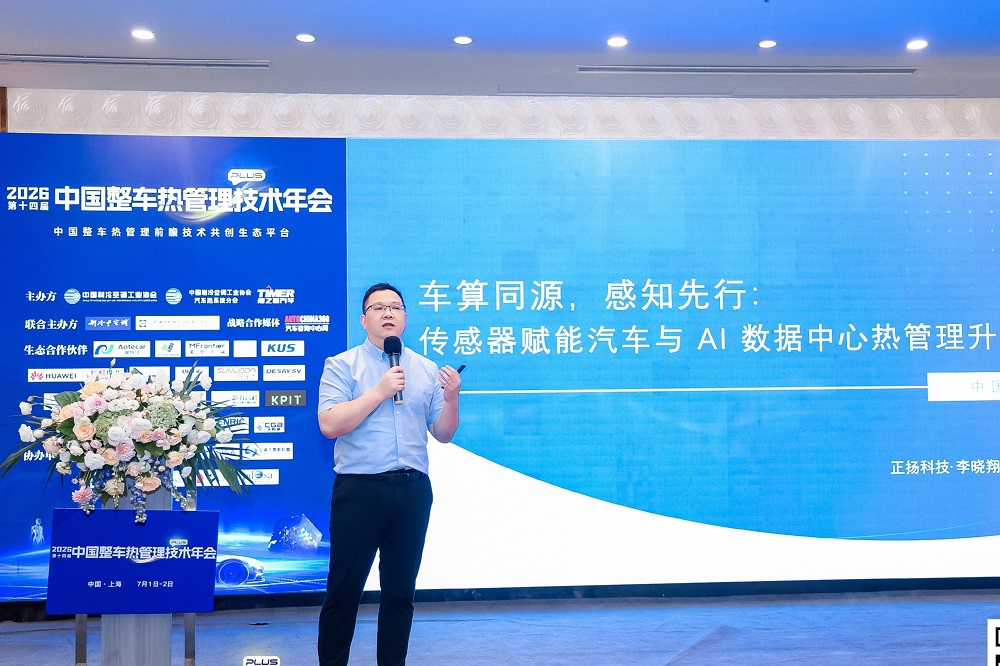
In his speech, centered on the core philosophy of “homologous thermal management for vehicles and computing equipment, sensor priority”, Mr. Li systematically analyzed the thermal management development trends of three high-growth scenarios: new energy vehicles, AI data centers, and AI robots. He pointed out that with the comprehensive penetration of electrification, high-voltage technology and intelligence, the iteration pace of thermal management technologies has accelerated significantly. The industry has completely phased out the early fragmented, independent passive heat dissipation mode, and fully evolved into a brand-new technical system featuring overall integration, intelligent collaboration, precise temperature control and safety stability. It has become a core pillar for improving vehicle energy efficiency, operational safety and intelligent comfort.
Building Holistic Thermal Management System Solutions
As a global automotive component supplier, KUS has established a dual-track layout covering sensors and thermal management, with independent and controllable core technologies and a complete industrial system integrating R&D, manufacturing, sales and services.
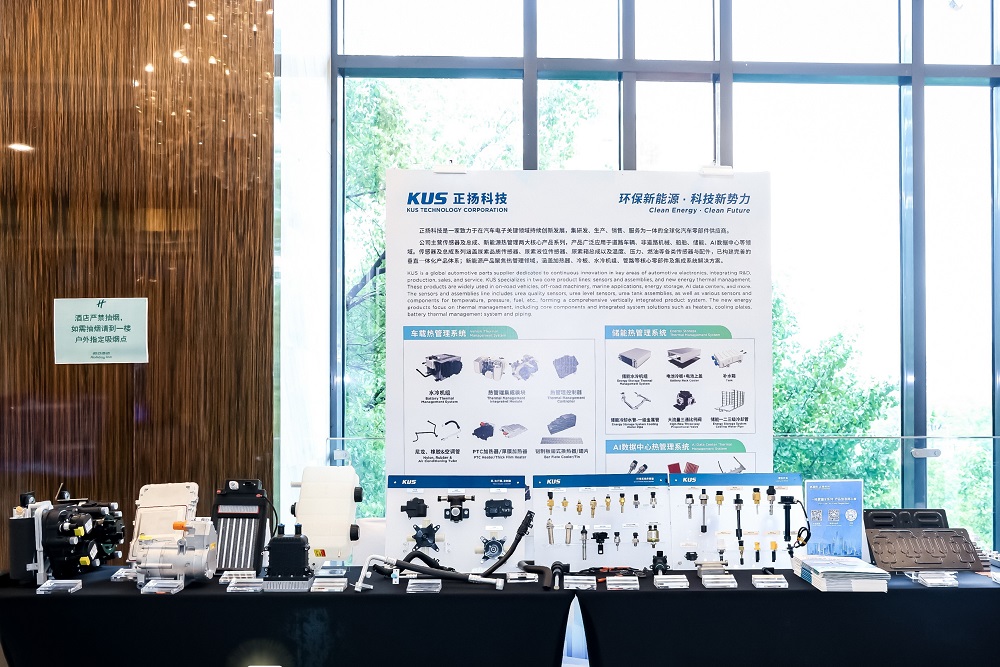
On the sensing front, KUS’s products are fully adaptable to scenarios including new energy vehicles, AI data centers and AI robots. The company independently develops and mass-produces a full range of sensors for temperature, liquid level, concentration, quality, conductivity, humidity and air quality. These products provide a high-precision, high-reliability and multi-dimensional data sensing foundation for holistic thermal management, realizing data-driven precise temperature control with sensor priority.
On the system front, KUS has completed full-link product layout for thermal management, covering core components and systematic solutions such as heaters, cooling plates, water cooling units, multi-way valves, pipelines, wiring harnesses, integrated thermal management modules and thermal management controllers. The company has upgraded from a single component supplier to a provider of full-vehicle holistic thermal management system solutions. Supported by a highly vertically integrated production system and continuously iterative R&D and innovation capabilities, KUS has built solid core competitive barriers in the industry.
Empowering Thermal Management Industry Development Through Technological Innovation
New energy vehicles drive the thermal management demand for electrified mobility, while AI data centers generate heat dissipation needs for high-density computing power. Driven by these two core tracks, thermal management has broken away from the traditional auxiliary supporting role and developed into a high-barrier, high-value core industry.
Moving forward, KUS will continue to focus on the core tracks of sensing technology and holistic thermal management. Adhering to innovation-driven development, the company will continuously iterate and upgrade core products and system solutions. With reliable technologies, high-quality products and efficient global services, KUS will sustainably create long-term value for customers, and facilitate the high-quality and sustainable development of the thermal management industry for new energy vehicles, AI data centers, AI robots and other sectors.